Risk and Flexibility
March 2025
In my first blog, I talked about the Carnegie Hall stage fright that never quite left me, about how I kept pressuring myself to be funny instead of just being present. Since then, I've been slowly learning to let go of that pressure. This blog is about what gets unlocked when you do.
Adaptability: The Boxing Match I Didn't Script
There was an exercise where we had to build a scene together in real time — accepting whatever happened, and applauding when someone made a mistake instead of treating it like a failure. My expectation going in was straightforward: I was going to be a good scene partner. I was going to use "Yes, and." I was going to listen and build. I had basically pre-loaded the algorithm.
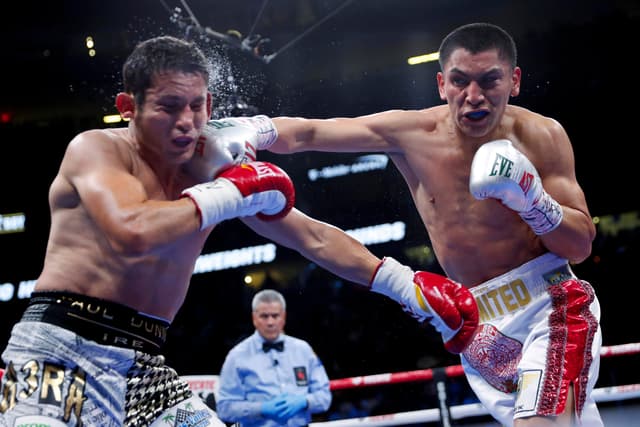
Then the scene started, and everyone just stood there. Silence. Nobody moved. As someone who hates dead air even more than awkward air, I made the first move: I pointed at Ben and Paul and declared them opponents in a boxing match. That part felt fine — I was still in control, I had set the stage.
What I hadn't planned for was what came next. Once Ben started throwing punches at Paul, the scene locked me into the role of live commentator. Every move they made, I had to narrate out loud, in real time, with energy — like a ringside announcer who had no idea what either fighter was about to do.
And then they started making moves I genuinely did not expect. A dramatic stumble. A slow-motion dodge. A completely unreadable pause. I froze. Not for long — maybe a second — but I felt it. That familiar loading screen. My brain was waiting for input that matched its model, and the input wasn't coming.
What I learned about myself in that moment was specific: my adaptability breaks down not when things get hard, but when I'm the one who set up the premise. I had created the scene, so I felt responsible for controlling it — and the second it slipped out of my control, I hesitated. The irony is that I was the one who made everyone else be unpredictable. I just didn't expect to be surprised by my own setup.
Under pressure, my creativity doesn't disappear — it gets cautious. I start reaching for the "correct" call instead of just making one. That freeze wasn't a lack of ideas; it was me auditing the ideas too fast. The lesson I took away: commit to the call. The wrong commentary said confidently is better than silence. The scene doesn't need accuracy — it needs momentum.
Adaptability in My Career: Accepting the AI Offer
I started college in 2020 as a freshman. There was no AI to speak of, only COVID. Debugging meant going to office hours, spending hours tracing through logic by hand, figuring out one slow line at a time whether I was even approaching the problem right. That was the landscape I built my understanding of software on.
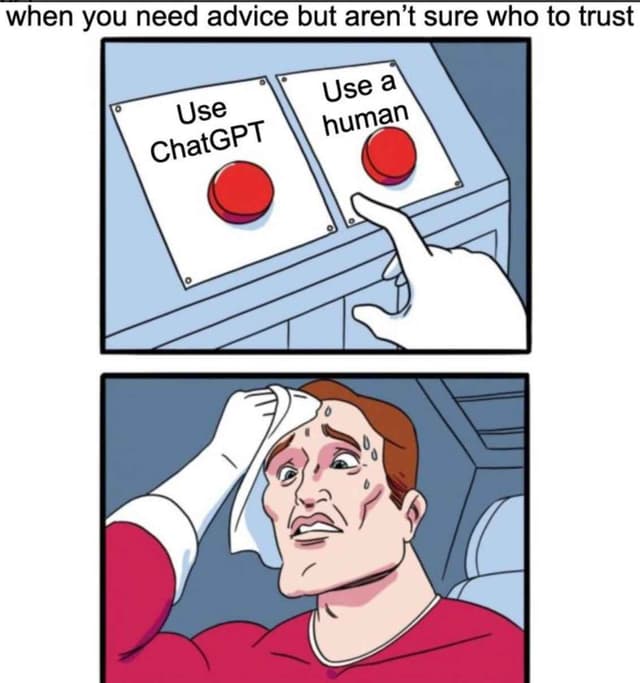
Then I left for mandatory military service, eighteen months between 2021 and 2023. I was largely cut off from the technology world while I was serving. When I came back, ChatGPT was everywhere. Large language models could generate code, explain errors, draft entire functions in seconds. My first reaction was honest disbelief: there is no way a program can think through a problem better than a person who has studied this for years. I resisted it. I felt like accepting it would mean that what I had built, the hours at office hours, the slow hard-won understanding, was somehow worth less.
That resistance is exactly what improv teaches you to let go of. In a scene, when your partner introduces something unexpected, the instinct to protect your original idea is natural. But it kills the scene. The move is to say "yes, and" — accept the new reality, and build from it. When I finally stopped defending what I already knew and started treating AI as an offer from the field, my whole approach shifted. I stopped asking "does this replace me?" and started asking "what does this make possible?"
The professional application is direct. As a CS student entering a field where the tools will keep changing, presence means staying focused on what the current moment actually requires instead of what I learned to do before. Accepting offers means treating every new technology, every new teammate with a different approach, every framework I have never touched, as something to build on rather than resist. The personal computers created an entire software industry. AI is doing the same thing. The engineers who will matter most are the ones who say yes to the scene as it is, not as they expected it to be.
Research on workplace adaptability supports this directly. A study published in Ergonomics found that cognitive flexibility, the ability to shift mental frameworks quickly in response to new information, is one of the strongest predictors of performance in high-uncertainty environments2. Every scene in class where I accept an unexpected offer instead of freezing is a rep for exactly that muscle.
A Risk I Actually Took: Becoming President of KSA
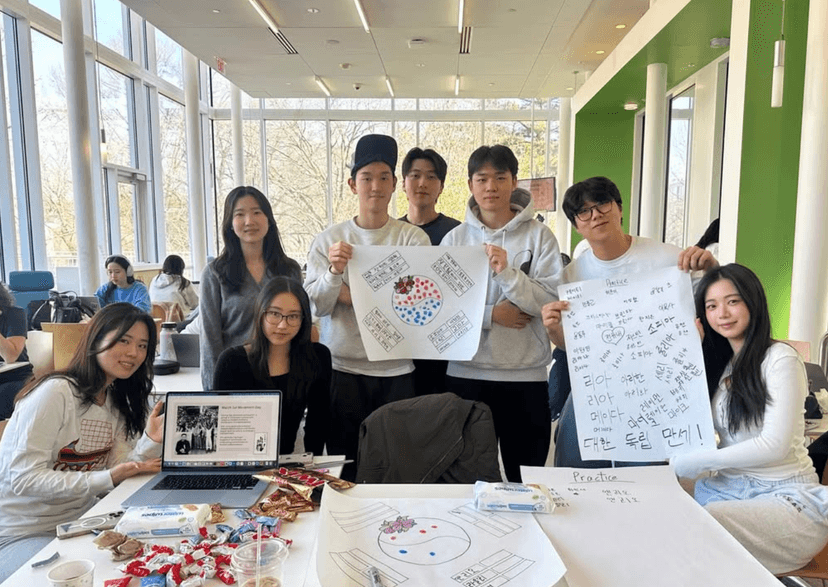
The most significant risk I took in my academic life had nothing to do with code. I was nominated to become the president of the Korean Students Association at Johns Hopkins University, and I almost said no.
What made it risky was exactly this: every leadership role I had taken before was technical. I led projects. I wrote systems. I was the person who showed up with a plan and executed it quietly. Running an organization meant something completely different. It meant being the face of a community, making decisions that affected people, not code, and doing all of it in front of everyone. My biggest fear was not failure in private. It was letting down a community that trusted me publicly. I was worried that I would stand in front of a room and have nothing worth saying.
I took it anyway. I still remember the first executive board meeting I ran. My voice shook when I opened. I had prepared talking points, but the moment I started speaking, I could feel the weight of people actually listening, waiting to see what kind of leader I was going to be. That is not a feeling you can rehearse for. You just have to start talking and trust that something real will come.
Something did. I started speaking about what I genuinely cared about for the association, the things I wanted to build, the problems I wanted to fix. Not from a script, just from what I actually believed. People responded. The conversations that followed were honest and direct. I made decisions I was not always certain about, resolved conflicts I had never been trained for, and learned to communicate in a way that no CS course had prepared me for.
Looking back, it is one of the best choices I made throughout my time at Hopkins. What I learned was specific: bold decisions, even imperfect ones, create momentum. Hesitation creates silence. And in a leadership role, silence is the thing that actually costs you the trust of the people you are supposed to lead.
The connection to improv is clear. According to the UCB Manual, "commitment is good acting" and a long form improviser is expected to invest in the reality of the scene so fully that the audience no longer sees an improviser, but a believable character (UCB Manual, p. 48). That first executive board meeting demanded exactly that. The room was not looking for a perfect president. They were looking for someone who believed in what they were saying enough to commit to it. The moment I stopped performing confidence and started actually investing in what I cared about, the dynamic in the room shifted. That is not a leadership trick. That is what commitment looks like when the stakes are real. Every time I now step into a scene and fully inhabit a choice without hedging, I am practicing the same thing I needed most in that meeting room.
A Risk in Class: The Game I Invented
At some point in class, we had an opportunity to create our own improv game. I came up with one: a prosecutor and two or three witnesses. The witnesses privately decide on a case, something that happened, a crime, an incident, an event. The prosecutor knows nothing. Their only tool is questions. Through interrogating the witnesses one by one, they have to piece together what the case actually is.
Designing the game felt easy. Showing it to the class did not. The risk was not in the rules. The risk was in wanting everyone to actually enjoy it. I care about that more than I usually admit. I am the kind of person who will spend twice as long on something if I think it will land better for the people on the receiving end. So when I stood up to demo the game and watched the room during those first few moments, I was reading every face. A pause too long, an uncertain look, a slow response from a volunteer, and my brain immediately went to: this is not working.
That internal spiral is the exact thing improv is designed to break. Presence means staying in the room, not living inside your own evaluation of how the room is responding. The game was still unfolding. The witnesses were still building the case. The prosecutor was still asking questions. But I had already started second-guessing, already started mentally apologizing for something that had not failed yet.
It did not fail. When the round finished and people started talking, it turned out others genuinely enjoyed it. The uncertainty I felt during the demo was entirely mine. The room was fine. I was the one who had not accepted the offer of the moment.
That experience translates directly to any situation where the outcome is uncertain and other people are involved. Presenting a project proposal, pitching a new feature to a team, leading a meeting where you are not sure the agenda is landing. The instinct to read every face and catastrophize is the same instinct I had during that demo. Research on psychological flexibility shows that people who tolerate uncertain outcomes without collapsing into avoidance perform better and recover faster in high-stakes professional situations3. What improv gives you is practice staying present while the outcome is still unknown. That is exactly what the classroom risk of putting my game in front of everyone taught me. You cannot know if something works until it finishes. Stay in the scene.

Citations
- Besser, M., Roberts, I., & Walsh, M. (2013). The Upright Citizens Brigade Comedy Improvisation Manual. Comedy Council of Nicea LLC. (UCB Manual, p. 48)
- Cañas, J. J., Quesada, J. F., Antolí, A., & Fajardo, I. (2003). "Cognitive flexibility and adaptability to environmental changes in dynamic complex problem-solving tasks." Ergonomics, 46(5), 482–501. Taylor & Francis Online
- Kashdan, T. B., & Rottenberg, J. (2010). "Psychological flexibility as a fundamental aspect of health." Clinical Psychology Review, 30(7), 865–878. ScienceDirect